I’ve tried all kinds of art medium over the years–oils, acrylics, soft pastels, and watercolor. As I’ve shifted from one to the other, I’ve dealt with some of the advantages and disadvantages with each.
Oil paint? Considered by many the highest quality for a painting. And there are advantages to using them–a thick, buttery consistency, rich colors, long drying time (giving you longer time to work on your painting). But that long drying time can also be an inconvenience, and the need to use mineral spirits or turpentine for cleanup makes me wary of using them.
On to acrylics. Quicker drying time! Water thinning and cleanup! But they can dry too quickly on your palette, especially when painting outside (en plein air). And the colors can be less vibrant than oils.
Soft (chalk) pastels. They are one of my favorite mediums. I love the rich colors, layering them, and that I don’t have to worry about them drying out or having to clean brushes. But they’re messy to use, can leave a film of pastel dust on surrounding surfaces, and are difficult to seal–spray sealants tend to darken the colors, and they STILL aren’t totally fixed on the page.
I finally moved on to watercolors. I’ve taken a couple of classes, bought watercolors in pans, in tubes, in travel sets, various types of watercolor paper, brushes, and other supplies to support my watercolor hobby. But watercolors require real skill to control the water and create vibrancy. Also, the light areas in a watercolor painting are actually the white of the paper showing through–a lot of planning and careful painting needs to be done to make sure that the light areas in a watercolor stay light. I like painting with watercolors, but feel that it needs more care than I can achieve when painting outside.
Recently I saw a YouTube video of an artist using gouache paints, and after learning more about them decided to give them a try.
Gouache is water-based like watercolors, but it’s opaque–watercolor tends toward transparency. Gouache is more like acrylics and oils, in that you can paint dark-to-light, as opposed to the light-to-dark technique required for watercolors. I’ve often lost light areas in watercolor paintings and had to resort to a sort of cheating–using Dr. Martin’s Bleedproof White paint to bring back light areas. Those areas can end up looking a bit grayish and chalky.
I recently bought an inexpensive set of pan gouache paints and re-found the video “Start with the Big Shapes–Gouache Painting for Beginners” posted by artist Brienne Brown.
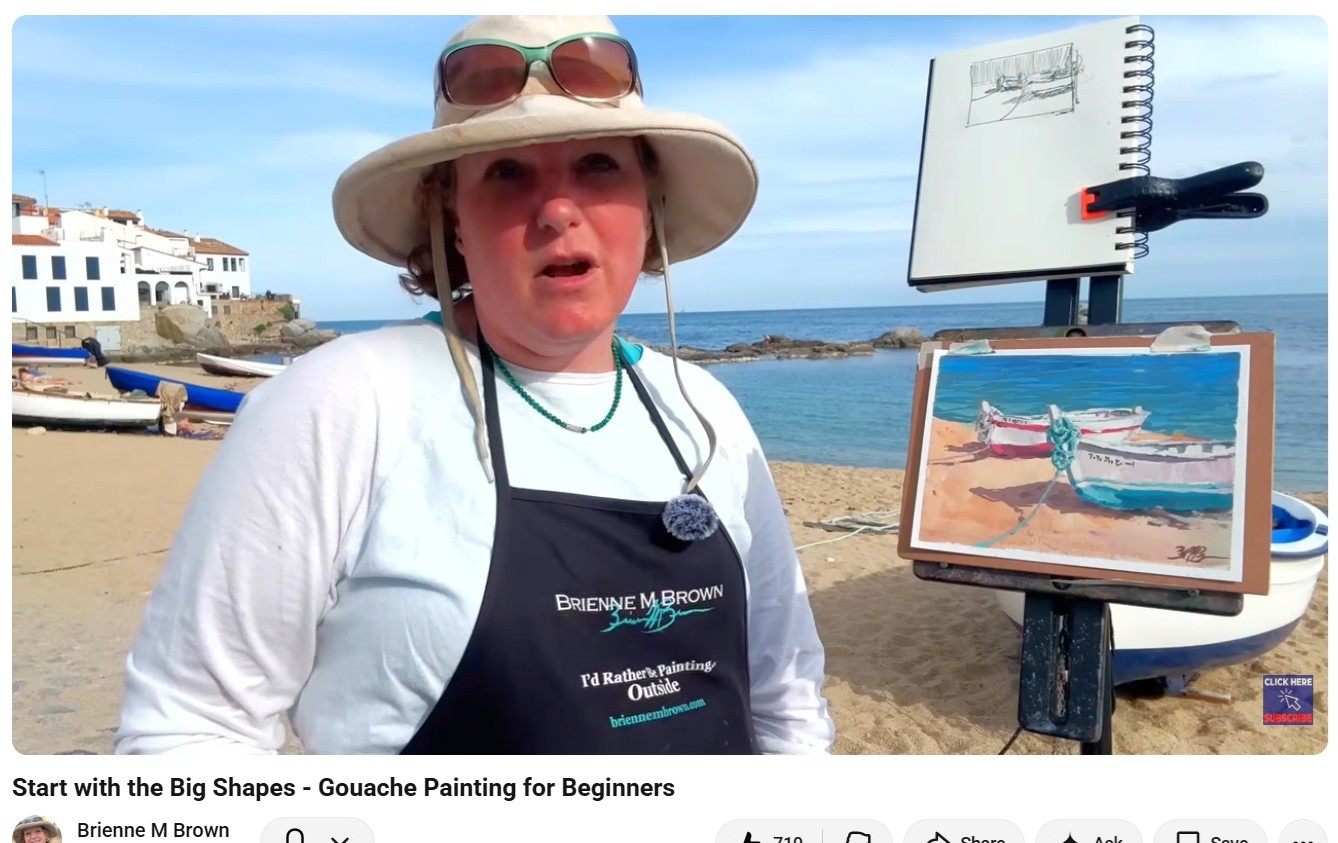
I decided to paint what she was painting and use the video like a mini online class–she’s really good at explaining and painting. I wanted to get a feel for the gouache, to see if they’re as flexible as I hoped they’d be.
It went pretty well. Gouache DOES give you flexibility when it comes to moving from light to dark and back again. Here’s my painting:
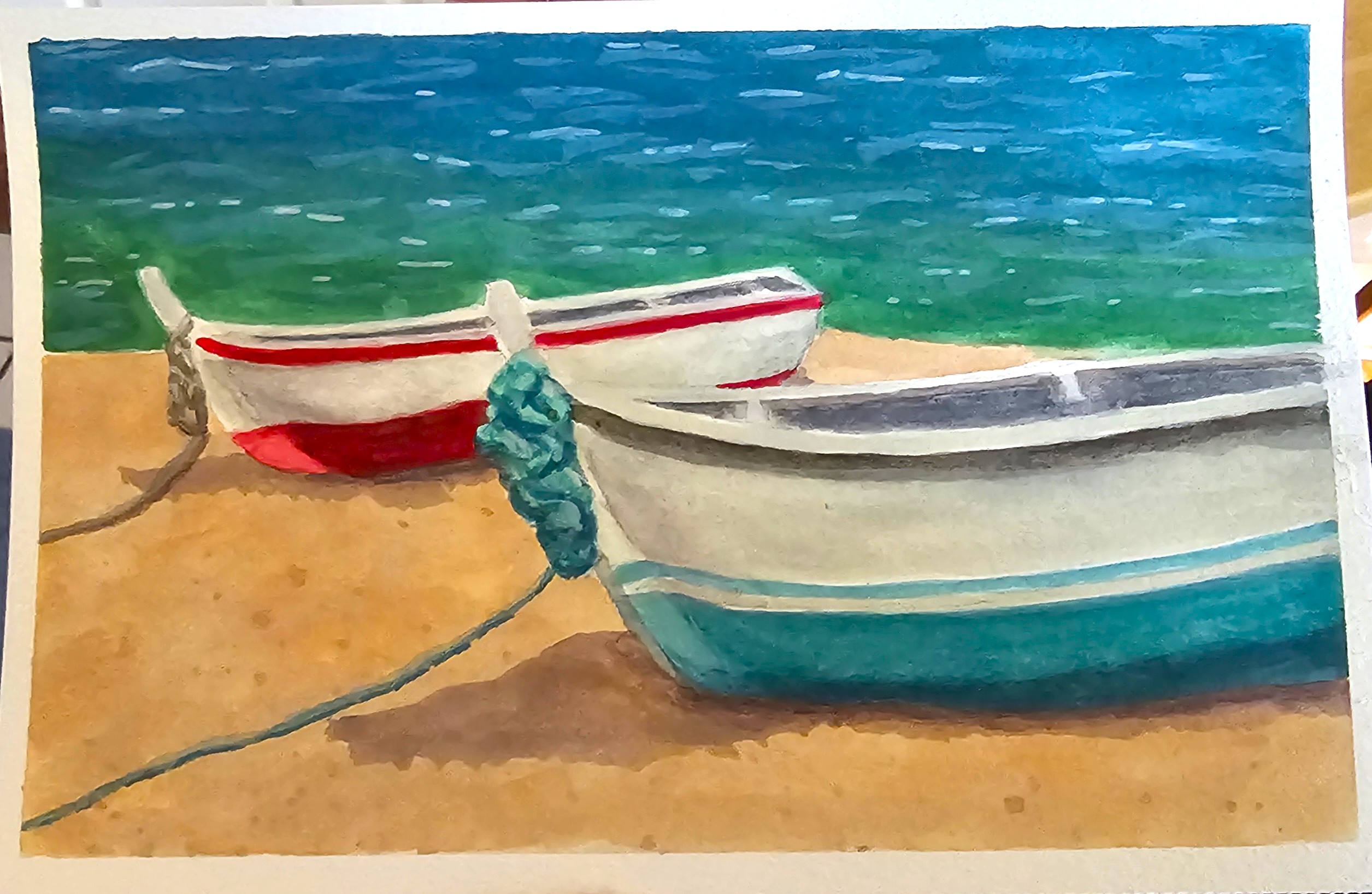
So what do I think about gouache? I like the ability to go from light to dark to light in a painting (I tend to tweak and fiddle). However, I didn’t really like the pan gouache paints–they’re chalky and dry and require frequent rewetting to be able to get pigment onto the brush.
So, I bought a set of gel gouache paints which arrived today. They’re soft and creamy–but because of this can apparently become moldy. So, after doing a little online research, I just ordered some clove bud oil, which can (hopefully) prevent this.
With fingers crossed that mold isn’t my new art problem, I can’t wait to try out my new paints.
 Chessie art and crafts